How to Start Snowboarding: The Complete Beginner's Guide
Want to start snowboarding but don't know where to begin? Here's everything you need to know: from choosing the right equipment to your first turns.
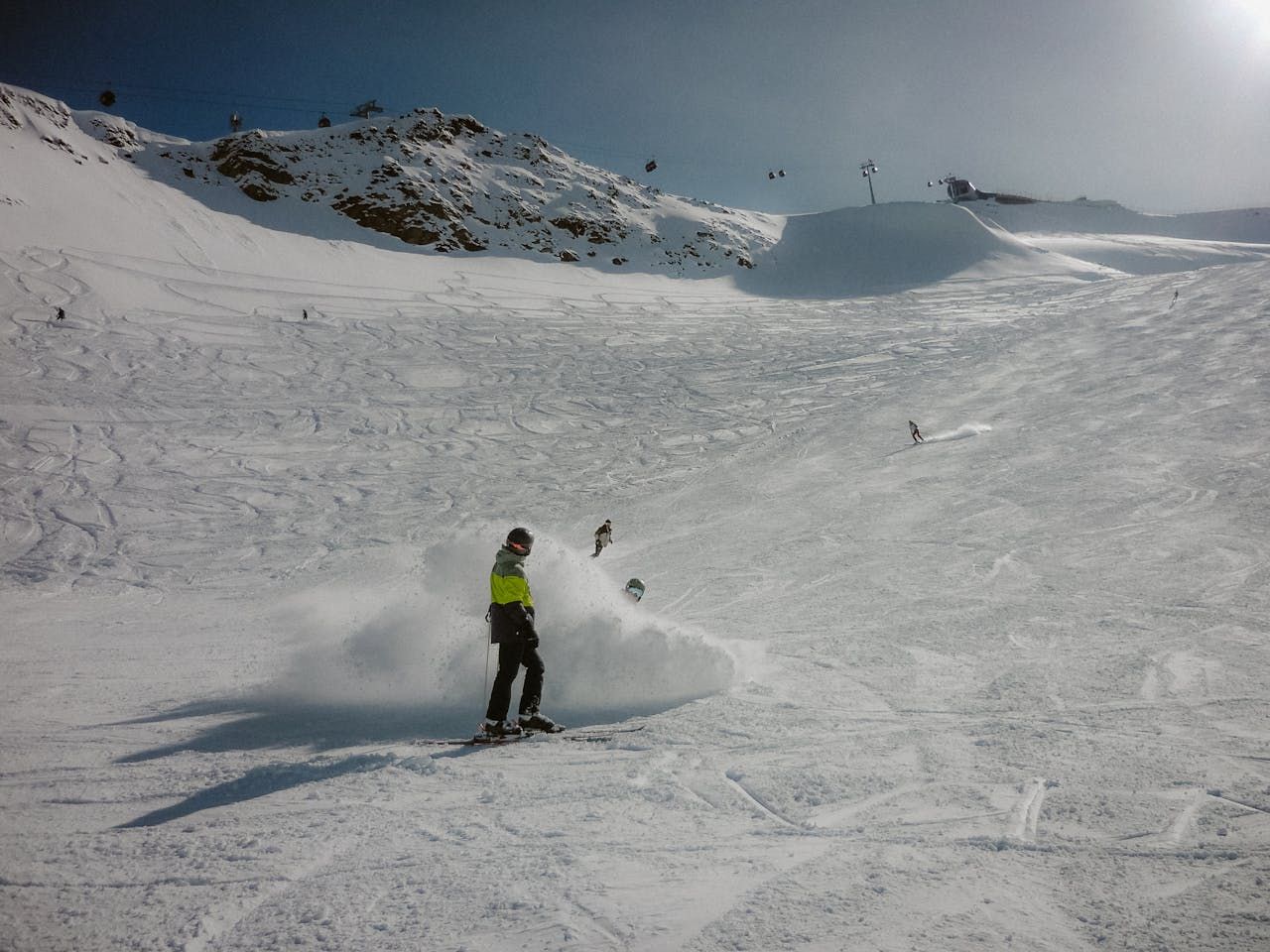
Snowboarding is one of the most exhilarating sports in existence. Carving down a snow-covered mountain at speed, feeling the edge bite into the snow through a turn, or landing your first trick in a snowpark — these are feelings that, once experienced, are hard to forget. But where do you begin? This guide is written for those starting from scratch who want to know everything before stepping on a board for the first time.
1. Why choose snowboarding (and not skiing)
The first question many people ask is: skiing or snowboarding? There is no universal answer, but snowboarding has characteristics that make it particularly appealing to many riders. The initial learning curve is a little steeper — the very first days can be tough — but once the basics are in place, progression is fast and the rewards are enormous.
Snowboarding demands a different relationship with the mountain compared to skiing: your body faces sideways relative to the direction of travel, your ankles and knees work differently, and the feeling of gliding across snow is uniquely tactile. Many riders find snowboarding more intuitive in freeride and freestyle, and the connection with the mountain more direct and immersive.
2. The equipment you need to start
You don’t need to buy all your gear straight away — for your first sessions, rental is the sensible choice. That said, it helps to know what you will need.
Board: for a beginner, a directional or all-mountain board of medium-soft flex is the ideal starting point. Avoid boards that are too stiff (designed for racing) or too short. A good starting length is typically somewhere between chin and nose height on the rider.
Bindings: soft or medium-soft bindings are best for learning, as they allow greater freedom of movement and are more forgiving of technical errors. Bindings are mounted on the board at a specific angle that depends on your stance.
Boots: a snowboard boot should be comfortable but snug — supportive without being painful. A boot that is too soft provides no support; one that is too stiff tires the feet quickly. For beginners, a medium flex is perfect. Always try boots on with technical snowboard socks.
Helmet: non-negotiable. Even on the easiest slopes, a fall can be dangerous. Your helmet must be certified, properly fitted, and not move around on your head.
Protective gear: wrist guards are strongly recommended for beginners — the wrists are the joints most at risk during snowboard falls. A padded hip/tailbone protector (essentially padded shorts) is also a good idea, and if you want complete peace of mind, a back protector rounds out the set. It is not the most stylish look, but it prevents a lot of pain.
3. Regular or Goofy: finding your stance
Before you stand on a board, you need to know which foot goes forward. This is called your “stance”: left foot forward is “regular”; right foot forward is “goofy”. Neither stance is better than the other — it is simply a matter of natural dominance.
How to find out? Try sliding in socked feet across a smooth floor: the foot you put forward instinctively is almost certainly your front foot on a snowboard. Alternatively, imagine pushing off on a skateboard: the foot you leave on the ground to push with is usually the back foot.
4. The first days: what to expect
Be honest with yourself: the first one or two days on a snowboard are often frustrating. You will fall — probably many times. Your wrists, knees and possibly your tailbone will ache. This is completely normal and part of the process. The good news is that progress comes quickly: many beginners are riding green runs independently by the second or third day.
The secret to fast progress is to not get discouraged, and to keep repeating movements. Every fall contains information: it tells you where you went wrong and how to correct it. Don’t rush to move on too quickly — master one skill properly before moving to the next.
5. First lessons: why a school is recommended
Many self-taught riders develop technical bad habits that take years to correct. A certified instructor immediately sees what you are doing wrong and shows you the most efficient correction. For beginners, even just two or three lessons with a good teacher can be the difference between a frustrating experience and a genuinely satisfying start.
Quality Italian snowboard schools — such as Professional Snowboarding in Madonna di Campiglio or Madness Snowboard in Livigno — have FISI-certified instructors experienced in working with beginners of all ages. Group beginner courses are often affordable and give you the chance to meet other first-timers.
6. The best destinations for beginners in Italy
Not all ski resorts are equal when you are learning. The best destinations for beginners need: well-groomed green and blue runs, qualified snowboard schools, equipment rental, and a welcoming atmosphere.
Livigno is one of the best choices: a large beginner area on Mottolino, qualified schools, and VAT-exempt prices that keep costs down. Madonna di Campiglio offers excellent facilities and some of the most beginner-friendly slopes in the Alps. Bardonecchia is easy to reach from north-west Italy, with lower prices and a well-organised ski area. Folgarida-Marilleva in Trentino is known for wide, gentle pistes that are perfect for those first few days.
7. Practical tips
Warm-up: before taking the first lift, spend a few minutes stretching and activating your muscles. Calves, quadriceps, ankles and shoulders are the areas most heavily used in snowboarding.
How to fall: learning to fall correctly is fundamental. Falling forwards, try not to land on open hands — use closed fists or your forearms instead. Falling backwards, bend your knees and round your back to avoid landing directly on your tailbone.
Clothing: layer up. Your base layer should be technical fabric (not cotton), your mid layer insulating (fleece or down), and your outer layer waterproof and windproof. Snow trousers and jacket should have a waterproofing rating of at least 10,000 mm. Waterproof gloves and goggles (or sunglasses) complete the kit.
Hydration and nutrition: at altitude you exert more effort than expected. Drink water regularly even when you don’t feel thirsty, and take breaks to eat something energising.
8. Common mistakes to avoid
Looking at your feet: one of the most widespread beginner errors. Your gaze should always be in the direction of travel, never down at the board.
Tensing up during falls: stiffening up is the main cause of injuries. Try to stay relaxed.
Going it alone: pride can be expensive. A couple of lessons with an instructor saves you weeks of slow, painful progression.
Choosing runs that are too difficult too soon: always start on the easiest slopes and move to harder ones only when you feel genuinely confident on the previous level.
Skipping the warm-up: cold muscles are far more prone to injury. Five minutes of warm-up at the start of the day makes a real difference.
Starting snowboarding requires a little patience, but the reward is immense. With the right equipment, a few lessons and genuine eagerness to learn, the mountain will give you experiences that last a lifetime.