
Freeride for Beginners: How to Start Riding Off-Piste
You're an intermediate rider and want to try off-piste? A complete guide on safety, equipment, where to start, and why hiring a mountain guide changes everything.
There comes a moment in every snowboarder’s progression when groomed slopes are no longer enough. You have already tackled the reds and blacks, you can manage your speed, and you are starting to eye the trees at the edge of the piste with genuine curiosity. That is the right moment to start thinking about freeride. But doing it well — safely and progressively — is a very different thing from simply ducking under the boundary rope.
This guide is for anyone who is honestly at an intermediate level and wants to do things properly.
First Things First: Be Honest About Your Level
Freeride does not just mean “ungroomed snow”. It means managing variable gradients, snow of unpredictable consistency, terrain you don’t expect, and doing all of this in conditions where a mistake has real consequences. No groomed service road to bail onto, no ski patrol watching you fall.
Before going off-piste, ask yourself:
- Can you ride with full control on any type of slope, including the hardest blacks?
- Do you know what to do if you fall on a steep, snowy slope?
- Have you ever taken an avalanche safety course, even a one-day introductory session?
If the answer to any of these is no, you are not yet ready for autonomous off-piste riding. And there is nothing wrong with that — it’s simply where you are right now.
The Minimum Equipment to Get Started
Airbag or freeride backpack For your first off-piste outings you don’t necessarily need an airbag (expensive), but a backpack with space for water, a first aid kit and spare clothing is mandatory. An avalanche airbag becomes recommended as soon as you venture onto terrain steeper than 25 degrees.
Avalanche transceiver, shovel, probe If you are leaving groomed slopes in an area with avalanche risk — and almost all off-piste terrain carries that risk — these three items are mandatory. Not one or two: all three. And you need to know how to use them. See our full guide on avalanche safety.
Suitable board Your directional piste board will work for easy powder to start with. For more demanding terrain, a board with a wider nose, more rocker and more volume will help you float in deep snow without fighting it. It’s not essential at the beginning, but you will notice the difference.
Protection Back protector, helmet (you are already wearing one, I hope), and consider knee protectors for your first outings on uneven terrain.
Where to Start: A Sensible Progression
Step 1: Piste edges and marked itineraries Many Alpine resorts have marked off-piste routes or “guided off-piste” — ungroomed but monitored itineraries. These are the ideal entry point. You are off the groomed run, you feel real snow under your feet, but you are in a relatively controlled environment with other riders around.
Step 2: Easy off-piste with an experienced companion Before venturing onto unknown terrain alone, do a few runs with someone who genuinely knows off-piste. Not a friend who “says they know it” — someone who can actually read the terrain, recognise danger signs, and knows how to react in an emergency.
Step 3: A mountain guide This is the best investment you can make in your progression as a freerider. A half-day or full day with an IFMGA-certified mountain guide teaches you more about reading terrain than you could learn on your own in two seasons. The guide knows which zones are safe and which to avoid, reads the avalanche bulletin professionally, and teaches you to move efficiently in ungroomed snow.
To find a mountain guide in your riding area: guidalpine.it or ask directly at the resort’s guide office.
How to Read Terrain as a Beginner
You don’t need to become an expert in snow science to ride off-piste safely. A few basic rules are enough:
Avoid slopes steeper than 30 degrees until you have experience. Most avalanches release on slopes between 30 and 45 degrees. Gentle slopes under 25 degrees are generally safe even at moderate danger levels.
Don’t descend in a group — go one at a time, with the others waiting in a safe zone (on a ridge, not below a slope). That way, if someone is caught, the others can intervene.
Observe the snowpack. Deep “whumpf” sounds, cracks propagating across the surface, snow that has been recently deposited by strong wind: these are all signals to take seriously.
Turn back if you have doubts. This is the most important piece of advice. The mountain will be there tomorrow. There is no run worth risking your life for.
The Best Areas to Start in Italy
Some Italian resorts offer off-piste that is particularly well suited for those starting out:
- Livigno: wide open spaces, gentle slopes accessible from various lifts, guides specialising in freeride
- Courmayeur / La Thuile: variety of terrain, mountain guides with decades of Mont Blanc experience
- Madesimo: excellent intermediate-level off-piste, less chaotic than the big resorts
- Foppolo / Carona: Bergamo’s Orobie Alps, accessible terrain, less well-known and less crowded
The Bottom Line
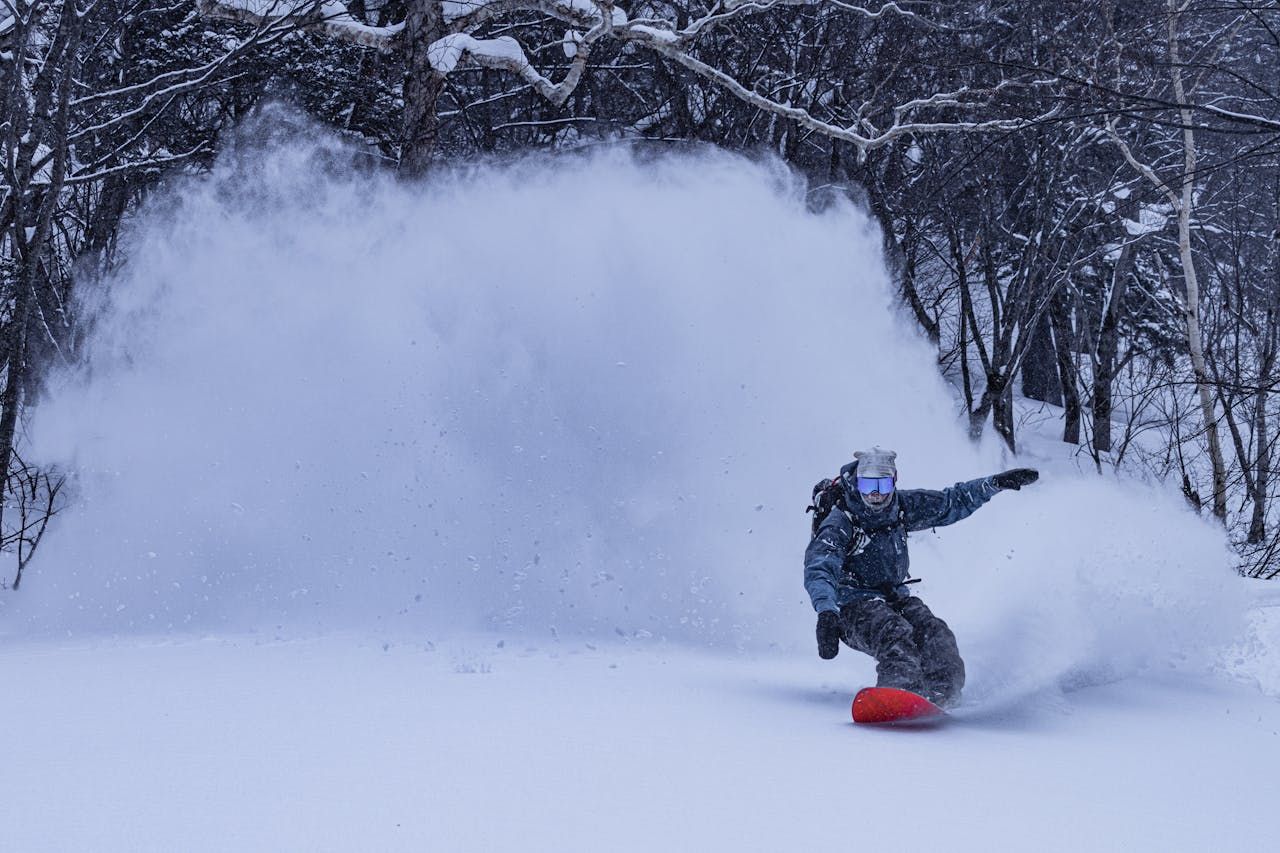
Freeride is one of the most rewarding experiences snowboarding can offer. That first descent on untouched fresh snow, the silence away from the pistes, the sensation of floating on a metre of powder — it is worth every hour of preparation.
But the preparation is not optional. Do it well, with patience and progression, and off-piste riding will remain open to you for decades.